Unify planning data
Bring network structures, load records, spatial layers and development assumptions into one governed model.
PowerGLF helps power utilities anticipate long-term demand and compare growth scenarios with confidence.
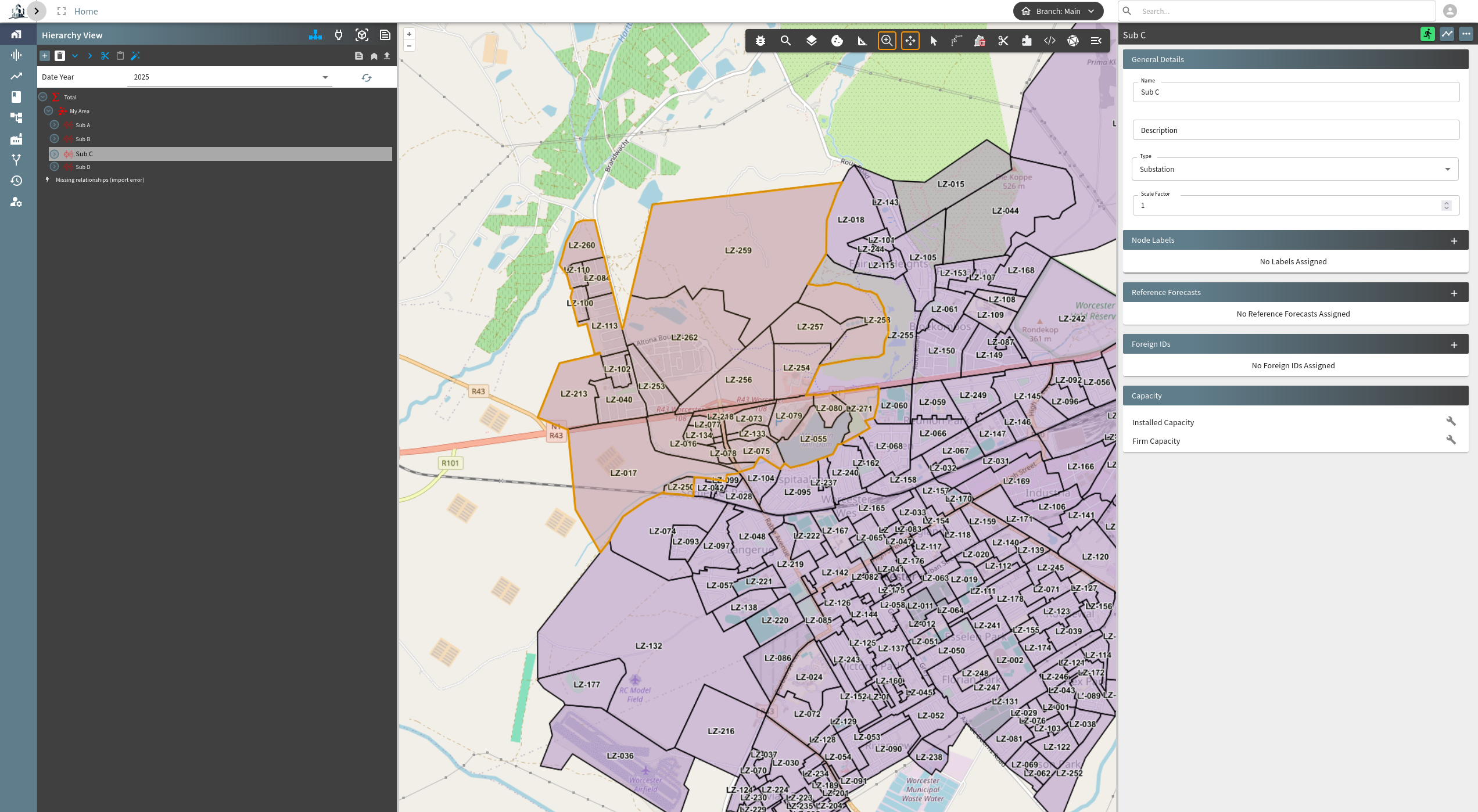
The platform
Model demand where it happens by combining network, customer, land-use and GIS context.
02Compare low, likely and high growth paths across a medium- to long-term planning horizon.
03Build hierarchy-based forecasts from individual load objects through to system totals.
04Trace forecast results back to methods, classifications, curves and source assumptions.
05Manage shared models with portfolio permissions, branching and a detailed audit trail.
06Connect planning workflows through Excel, PowerFactory, OData and reporting tools.
A clearer planning process
Move beyond isolated spreadsheets and black-box outputs. PowerGLF keeps assumptions, methods, scenarios and results connected throughout the forecast lifecycle.
See how PowerGLF worksBring network structures, load records, spatial layers and development assumptions into one governed model.
Apply spatial, trend, customer, manual and DER methods to build comparable growth scenarios.
Locate future constraints, test interventions and publish evidence for investment decisions.
Confidence at enterprise scale
PowerGLF provides the controls large planning organisations need to collaborate without losing accountability, consistency or traceability.
Works with your planning ecosystem
Plan beyond the next constraint